Visual Museum


Filmmaking Study Program
Production Course

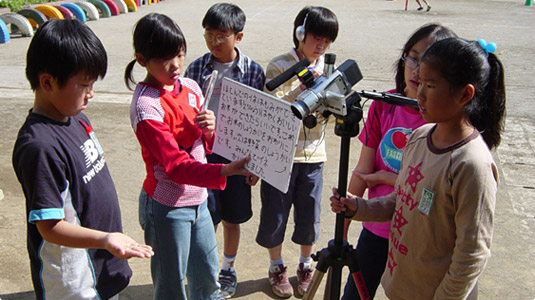
Classes in filmmaking study have been running since 2003. The course totals 20 hours of comprehensive study with lessons from Visual Museum instructors. The students are mainly in the fifth year of elementary school and second year of junior high school. In the final stages of the course, each class makes a program of their finished work in studio 301 of the Audio Visual Museum.

* Please see SKIPCITY Channel to view the works of the schools' video works.

Objective

The ability to create and express oneself through visual media has become an indispensable communicative skill in the modern world, on par with the ability to write. Skip City's Filmmaking Study Program is aimed at having children and students acquire the basic skills to allow them to convey their own expressions and feelings in the universally understood language of video.

  • Amid a flood of information from various types of TV and Internet media, media literacy is a skill that's being emphasized in education programs around the world. This form of literacy involves the ability of correctly appraising information from the media, at a time when people are concerned about the effects media are having on the youth. To teach media literacy, the current Filmmaking study Program has students use their experiences to make proper evaluations of this information. This goal is achieved through hands-on learning, where the students create their own information for media.
  • Filmmaking production is a collaborative effort involving various skills. Students specialize, and then work in collaboration with others. The final result is in line the needs of society. The students share a sense of achievement by their finished project, after they've fulfilled their assigned role and demonstrated their own particular skills.
  • Works produced by the Filmmaking Study Program are distributed and transmitted widely to other schools by such means as SKIPCITY Channel (an Internet broadcasting station run by the Saitama pref). The use of video to exchange of information and opinions helps create new areas of interaction. The works the students create become new information, and the experience of witnessing the various responses and emotional effects the works have on students of other schools becomes a new aspect of learning.

Production Course Content

  • Making Video News
    Students search the vicinity of their schools for topic ideas and choose the best ones after study and interviews. Trying to convey their topics through the visual medium gives them the experiences of joy and difficulty. That basic process is in all aspects of the program.
  • Making Video Letters
    This is a form of expression by which messages are sent to specific people. The students attempt to express themselves by converting written letters into images.
  • Making Ad Videos
    Students make public service messages in a TV commercial format to convey manners or school rules. The objective is to attract the attention of a large number of people during a short duration of time. In the process, the students learn how to disseminate specific messages.

Other programs:

  • Using Cameras
  • Making Video Albums
  • Making Documentaries
  • Creating Animation
  • Making Music Videos
  • Making Dramas

A total of 9 programs.